

In the world of innovative materials, bamboo fiber sponge has emerged as a remarkable product with a wide range of unique properties. One of the particularly interesting aspects is its sound - absorption property. As a supplier of Bamboo Fiber Sponge, I am excited to delve into this topic and share comprehensive insights.
Composition and Structure of Bamboo Fiber Sponge
Before exploring the sound - absorption property, it's essential to understand the composition and structure of bamboo fiber sponge. Bamboo fiber is the primary raw material. Bamboo is a fast - growing and sustainable plant, which makes the sponge an environmentally friendly choice. The bamboo fibers are processed through a series of techniques to form a porous structure.
The porous structure of bamboo fiber sponge is the key to its many properties, including sound absorption. These pores vary in size and shape, creating a complex network within the sponge. The fibers are intertwined, creating a three - dimensional matrix that can interact with sound waves in a special way.
How Sound Absorption Works
Sound is essentially a wave that travels through a medium, such as air. When sound waves encounter an object, several things can happen: they can be reflected, transmitted, or absorbed. In the case of bamboo fiber sponge, the porous structure plays a crucial role in the absorption process.
When sound waves enter the sponge, they travel through the pores. The irregular shape and size of the pores cause the sound waves to bounce around multiple times. As the sound waves move through the pores, they interact with the bamboo fibers. This interaction causes the sound energy to be converted into heat energy through a process called viscous dissipation. The energy of the sound waves is gradually reduced, resulting in sound absorption.
Factors Affecting Sound - Absorption of Bamboo Fiber Sponge
Density
The density of the bamboo fiber sponge has a significant impact on its sound - absorption performance. Generally, a higher - density sponge has smaller pores. Smaller pores can more effectively trap high - frequency sound waves. High - frequency sounds have shorter wavelengths, and the small pores can disrupt their propagation more easily. On the other hand, a lower - density sponge with larger pores is more effective at absorbing low - frequency sound waves. Low - frequency sounds have longer wavelengths, and the larger pores allow the sound waves to penetrate deeper into the sponge, where they can be absorbed.
Thickness
The thickness of the bamboo fiber sponge also affects its sound - absorption ability. A thicker sponge provides a longer path for the sound waves to travel through. This means that the sound waves have more opportunities to interact with the fibers and be absorbed. As the thickness increases, the sponge can absorb more sound energy, especially for low - frequency sounds. However, there is a limit to the improvement in sound - absorption with increasing thickness. After a certain point, the additional thickness may not result in a proportional increase in sound - absorption performance.
Porosity
Porosity refers to the volume of pores in the sponge relative to its total volume. A higher porosity means that there are more pores in the sponge, providing more space for the sound waves to enter and be absorbed. However, if the porosity is too high, the structural integrity of the sponge may be compromised. A well - balanced porosity is required to ensure both good sound - absorption performance and mechanical strength.
Comparison with Other Sound - Absorbing Materials
Compared with Traditional Fiberglass Insulation
Traditional fiberglass insulation is a commonly used sound - absorbing material. While fiberglass insulation has good sound - absorption properties, it has some drawbacks. Fiberglass can be irritating to the skin, eyes, and respiratory system, which makes it less user - friendly. In contrast, bamboo fiber sponge is a natural and non - toxic material. It is safe to handle and does not pose health risks.
In terms of sound - absorption performance, bamboo fiber sponge can perform comparably to fiberglass insulation, especially in the mid - to high - frequency range. With proper design and adjustment of density and thickness, bamboo fiber sponge can be an excellent alternative to fiberglass insulation.
Compared with Foam Materials
Foam materials are also widely used for sound absorption. Foam usually has a uniform pore structure, which can provide good sound - absorption in a specific frequency range. However, many foam materials are made from synthetic polymers, which are not environmentally friendly.
Bamboo fiber sponge, being made from natural bamboo fibers, is biodegradable and sustainable. In addition, the complex and irregular pore structure of bamboo fiber sponge allows it to absorb sound in a broader frequency range compared to some foam materials.
Applications of Bamboo Fiber Sponge Based on Sound - Absorption Property
Interior Decoration
In interior decoration, bamboo fiber sponge can be used as wall panels or ceiling tiles. By installing bamboo fiber sponge in rooms, such as living rooms, bedrooms, and offices, the noise level can be significantly reduced. It can absorb the reverberant sound in the room, creating a more comfortable and quiet environment. For example, in a home theater, using bamboo fiber sponge on the walls can enhance the audio experience by reducing echoes and background noise.

Automotive Industry
In the automotive industry, noise reduction is an important aspect of vehicle design. Bamboo fiber sponge can be used as a sound - absorbing material in car interiors. It can be placed in door panels, under the dashboard, and in the trunk to reduce the noise from the engine, road, and wind. This not only improves the comfort of the passengers but also reduces driver fatigue.
Industrial Noise Control
In industrial settings, there are often high - level noises from machinery and equipment. Bamboo fiber sponge can be used to construct sound - absorbing enclosures or barriers around the noisy equipment. This helps to contain the noise and prevent it from spreading to the surrounding environment, protecting the health of workers and reducing the impact on the neighboring areas.
Our Bamboo Fiber Sponge Products
As a supplier of Bamboo Fiber Sponge, we offer a wide range of products with different densities, thicknesses, and porosities to meet various sound - absorption requirements. Our products are carefully manufactured to ensure high - quality sound - absorption performance.
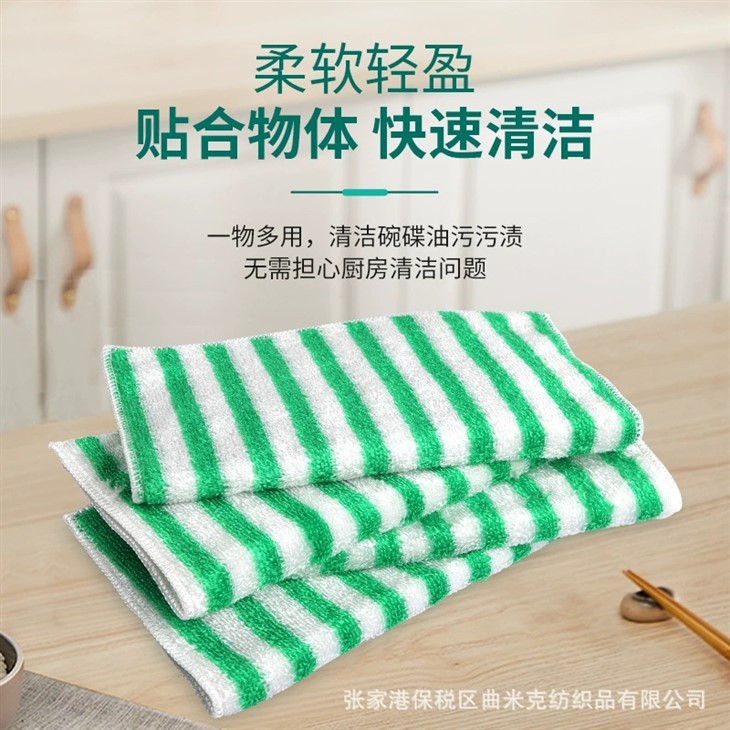
In addition to the sound - absorption property, our bamboo fiber sponge also has other excellent characteristics. It is highly absorbent, which makes it suitable for cleaning applications. We also provide Bamboo Fiber Dishwashing Towel and Microfiber Dust Towel, which are made from similar high - quality materials and can be used in kitchen cleaning and dusting.
Contact Us for Purchase and Negotiation
If you are interested in our bamboo fiber sponge products for sound - absorption or other applications, we welcome you to contact us for purchase and negotiation. We are committed to providing you with the best products and services. Whether you are an interior designer, an automotive manufacturer, or an industrial enterprise, our products can meet your needs.
References
- "Acoustics: An Introduction to Its Physical Principles and Applications" by Allan D. Pierce
- "Handbook of Noise and Vibration Control" by Cyril M. Harris
- Research papers on the acoustic properties of natural fiber materials from academic journals such as "Journal of Sound and Vibration"